The Symbol of Open Arms: Why Radical Welcome Is Reshaping Leadership and Culture
In an era defined by fragmentation, polarization, and digital fatigue, a quiet but powerful counter-movement is gaining momentum. Across industries, disciplines, and creative fields, professionals are rediscovering the value of radical welcome. At the heart of this shift lies a resonant archetype: Jesus Christ with Open Arms. This image, long familiar in religious iconography, transcends its theological origins to speak directly to contemporary needs for belonging, psychological safety, and genuine human connection. For entrepreneurs, marketers, creators, and leaders, understanding this symbol is less about faith and more about a framework for engagement that meets the moment.
What Jesus Christ with Open Arms Represents Today
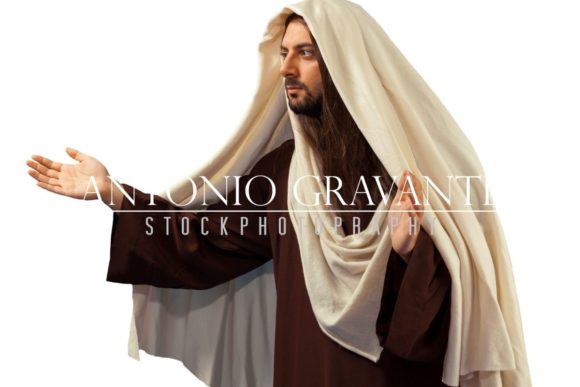
At its core, the posture of Jesus Christ with Open Arms embodies unconditional acceptance. It is an invitation that makes no demands upfront, a stance that says, "You are welcome here as you are." In a professional context, this is not about religious endorsement but about the posture of leadership, branding, and community building. The open arms signal safety, receptivity, and a willingness to engage without judgment. For a workforce increasingly prioritizing purpose and belonging, this symbol has become a shorthand for the kind of environment people crave.
When we examine what this means in practice, it becomes clear that organizations and creators who adopt this stance are not being passive. Rather, they are proactively removing barriers to entry. They are designing experiences, communications, and cultures that lower the threshold for participation. This is the opposite of gatekeeping. It is the deliberate cultivation of invitation.
Psychological Safety as a Business Imperative
One of the most discussed concepts in organizational psychology over the past decade has been psychological safety. Coined by Amy Edmondson, it describes a climate where people feel safe to take risks, speak up, and be vulnerable without fear of reprisal. The image of Jesus Christ with Open Arms maps directly onto this idea. Leaders who embody this posture create teams where innovation flourishes because failure is not punished, it is learned from. For entrepreneurs and executives, this is not soft idealism. It is a competitive advantage. Companies with high psychological safety outperform peers in agility, retention, and problem-solving.
Marketers, too, are applying this principle. Brand messaging that emphasizes welcome—"you belong here," "come as you are"—resonates deeply with audiences tired of exclusionary or aspirational marketing that tells them they are not enough. The open arms posture reframes the relationship between brand and consumer from transactional to relational. It acknowledges that the audience does not need to be fixed or improved. They simply need to be received.
The Rise of Inclusive Design and Accessibility
In technology and product development, inclusive design has moved from a niche concern to a mainstream requirement. Accessibility features, diverse representation, and user-centered processes all reflect a similar ethos: the product or service should adapt to the user, not the other way around. The open arms symbol encapsulates this philosophy. It suggests that the environment—whether physical, digital, or cultural—should be expansive enough to accommodate difference. For software creators, this means building flexible interfaces. For event organizers, it means offering multiple ways to participate. For content creators, it means using language that does not alienate.
Why People Are Paying Attention Now
The cultural moment is ripe for this message. Burnout is at an all-time high across professions. The pandemic accelerated a crisis of isolation, even as digital tools proliferated. People are starved for genuine connection, not just more transactions. The posture of Jesus Christ with Open Arms offers a counterpoint to the efficiency-obsessed, metrics-driven culture that has dominated recent decades. It reminds professionals that the most powerful currency is still trust, and that trust is built through consistent, unconditional welcome.
Furthermore, the rise of remote and hybrid work has fragmented teams. Leaders can no longer rely on hallway conversations or water-cooler moments to build cohesion. They must be intentional about creating belonging. The open arms posture provides a model: leaders must signal, repeatedly and across channels, that every team member is valued, heard, and safe. This is not a one-time declaration but an ongoing practice.
For freelancers and solopreneurs, the same principle applies. Building a personal brand around welcome and service—rather than expertise and authority alone—creates deeper loyalty. When a freelancer positions themselves as someone who accepts clients where they are, without judgment, they attract higher-quality relationships and repeat work. The market increasingly rewards those who can hold space for ambiguity and imperfection.
From Command to Collaboration
Traditional leadership models emphasized hierarchy, control, and distance. The leader was the expert, the decision-maker, the arbiter. Today, the most effective leaders are facilitators. They create conditions for others to succeed. This shift mirrors the open arms posture. Leaders who practice radical welcome do not lose authority; they gain influence. Their teams trust them because they feel seen. This is a fundamental change in the workflow of leadership: less telling, more asking; less directing, more enabling.
Content That Welcomes Rather Than Sells
In marketing, the landscape has shifted from interruption to invitation. Consumers are adept at tuning out ads. What they respond to is content that educates, inspires, or comforts without demanding immediate action. The open arms approach to content creation means producing material that gives value upfront, with no strings attached. It means writing blog posts, producing videos, and designing experiences that say, "I see your struggle, and here is something that might help." Over time, this builds authority and trust. The sale becomes a natural consequence of the relationship, not a forced transaction.
Community as Product
For entrepreneurs building digital products and services, community has become a core feature. Users do not just want a tool; they want a tribe. They want to belong to something larger. The most successful communities are those that practice radical welcome. They have clear norms around respect and inclusion, and they actively onboard new members with warmth. The image of Jesus Christ with Open Arms is a powerful touchstone for community builders who want to resist the natural drift toward insularity and cliques. By constantly re-centering welcome, they keep their communities healthy and growing.
Practical Examples and Observations
Consider a mid-sized creative agency that recently overhauled its client onboarding process. Previously, the process was a checklist of requirements, contracts, and briefs delivered with clinical efficiency. Clients often felt intimidated and overwhelmed. The agency redesigned the process around the principle of welcome. They now begin each engagement with a no-agenda conversation. They ask about the client's hopes, fears, and context. They acknowledge that the client is already doing their best. The response has been dramatic: higher satisfaction scores, longer retainers, and more referrals. The team internally describes this as "open arms onboarding." The results speak for themselves.
Another example comes from a SaaS founder who built her entire company culture around the idea of unconditional acceptance. Her company has no strict hierarchy. Every employee, regardless of role, has direct access to leadership. Mistakes are openly discussed in weekly retrospectives without blame. New hires are paired with mentors whose primary job is to help them feel at home. The company's retention rate is three times the industry average. When asked about her philosophy, the founder says, "We start from the assumption that everyone wants to contribute. Our job is to remove the obstacles." That is the open arms posture in action.
In the world of content creation, a popular newsletter writer has built a subscriber base of over 200,000 by consistently writing with a tone of invitation. She addresses her readers as peers, not pupils. She shares her own struggles openly. She never uses guilt or fear to drive engagement. Her open rate is over 50 percent, and her readers often describe the newsletter as "a place I feel seen." Her approach is not manipulative. It is genuinely welcoming. And it works precisely because it is authentic.
Connecting to Larger Developments
The embrace of the open arms posture is part of a larger cultural turn toward authenticity, vulnerability, and belonging. We are seeing this in the decline of polished, corporate language in favor of conversational, human-centered communication. We see it in the rise of therapy-speak, where terms like "holding space" and "safe container" have entered the business lexicon. We see it in the growing demand for leaders who are emotionally intelligent and self-aware.
At the same time, the technology landscape is evolving in ways that make radical welcome more possible. AI-powered tools can now personalize experiences at scale, allowing companies to make every user feel individually recognized. Community platforms facilitate connection across geographic and demographic boundaries. Analytics give leaders real-time insight into whether their environments feel safe or stressful. The infrastructure for welcome is more accessible than ever. The question is whether we have the will to use it.
The symbol of Jesus Christ with Open Arms is ancient, but its relevance is profoundly contemporary. It offers a vision of leadership and connection that meets the deepest needs of our time: the need to belong, the need to be safe, and the need to be welcomed without condition. For professionals across every field—whether you are building a product, leading a team, creating content, or serving clients—adopting this posture is not just noble. It is practical. It is effective. And it is urgently needed.
As you move forward in your own work, consider where you might open your arms a little wider. Where are you unintentionally creating barriers? Where could you extend more trust? Where could you welcome someone who feels like an outsider? The answers to these questions may well define your next season of growth. Because in a world that often feels closed, the ones who open their arms first will be the ones people remember.