“Try Jesus, Not Me Cause I Throw Hands” – Understanding Its Meaning, Origin, and Why It Connects
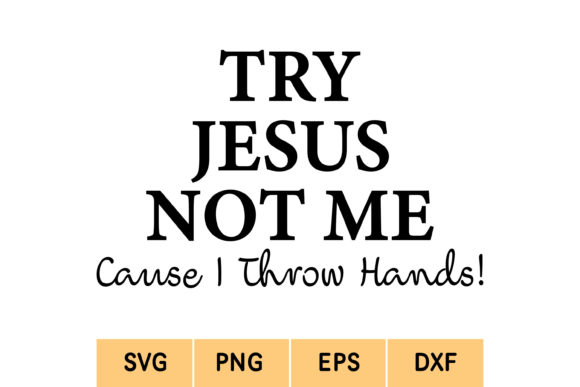
If you have scrolled through social media in the last few years, you have likely come across the phrase “Try Jesus, not me cause I throw hands.” It is often paired with a meme, a video of someone losing patience, or a street preacher holding a sign. The sentence is short, punchy, and deliberately provocative. But beneath its surface-level humor lies a surprisingly layered commentary on faith, human nature, and the tension between spiritual ideals and everyday reality.
In this article, we will break down exactly what this phrase means, where it came from, why people find it so relatable, and what it reveals about the way many people navigate their beliefs and boundaries today. By the end, you’ll have a thorough understanding of the concept behind the slogan and why it has resonated across different communities.
Where Did “Try Jesus, Not Me Cause I Throw Hands” Come From?
Like many viral expressions, the exact origin is hard to pin down. The phrase appears to have emerged from two overlapping cultural streams: street preaching and internet meme culture.
Street preachers have long used provocative signs to attract attention. Signs that read “Try Jesus” or “Jesus Saves” are common. At some point, a clever or frustrated preacher added a second line – “Not Me Cause I Throw Hands” – as a way to acknowledge personal limits while pointing toward a higher solution. The expression quickly found a second life online. Memes featuring a preacher holding the sign, or a screenshot of a tweet with the same wording, spread across platforms like Twitter, Instagram, and TikTok.
It also became popular among people who are not particularly religious but appreciate the blunt honesty of the statement. The phrase captures a universal feeling: “I am not the one to test. Please take your issues somewhere else – ideally to someone who is actually patient and forgiving.”
What the Phrase Actually Means – Breaking It Into Two Parts
To understand the full weight of the saying, it helps to split it in half and examine each part separately.
Part 1: “Try Jesus”
This part is a direct invitation toward religious faith, specifically Christianity. “Try Jesus” suggests that the person you are dealing with – the speaker – is not the best source of patience, mercy, or forgiveness. Instead, you should take your struggles, complaints, or conflicts to Jesus, who is understood to be infinitely patient and compassionate. It is a referral of sorts: from a flawed human to a perfect divine being.
In a Christian context, this aligns with teachings about turning the other cheek and loving your enemies. Jesus is portrayed as the ultimate example of non-violence and grace. By saying “try Jesus,” the speaker acknowledges that they are not capable of that standard – but they believe the standard itself is still valid.
Part 2: “Cause I Throw Hands”
The second half is where the phrase gets its edge. “Throw hands” is slang for getting into a physical fight. It implies that if you push the speaker too far, they will not respond with gentle words or passive endurance. They will fight back. This is a boundary-setting statement. It says, “I am not safe to test. I have limits, and I will defend them.”
Together, the two halves create a powerful contrast. The speaker is essentially saying: “I aspire to the ideal of peace and forgiveness, but I am honest about my own capacity for anger and retaliation. If you need grace, go to the source. If you come at me, you will get what I have to give – and it’s not grace.”
Why the Phrase Resonates So Widely
This saying might sound like a joke, but its popularity reveals something deeper about modern life and spirituality. Here are several reasons it connects with so many people:
- Authenticity over hypocrisy – Many people appreciate the honesty of admitting personal limits rather than pretending to be endlessly patient. The phrase pushes back against a performative kind of faith where people claim to be peaceful but are secretly resentful.
- Relatable human struggle – Almost everyone has felt the tension between wanting to do the right thing and wanting to react emotionally or physically when provoked. The phrase gives a voice to that internal conflict.
- Humor as a coping mechanism – The blunt, almost absurd juxtaposition of spiritual referral and physical threat is funny. Humor helps people talk about serious topics like anger, faith, and boundaries without becoming defensive.
- Cultural shorthand – In an age of short attention spans, a six-word sentence can convey an entire worldview. The phrase works as a quick way to say: “I have principles, but I am not a doormat.”
Common Misunderstandings About “Try Jesus, Not Me”
Because the phrase is often used humorously, some people dismiss it as shallow or even disrespectful. Others worry it promotes violence or undermines Christian teaching. Let’s address a few frequent misunderstandings directly.
Misunderstanding 1: It rejects Christianity
Actually, the phrase does not reject Jesus at all. It directs people toward Jesus while honestly admitting the speaker’s own limitations. In many ways, this supports a Christian understanding of human nature: people are flawed and in need of divine help. The phrase is more self-aware than cynical.
Misunderstanding 2: It glorifies violence
The phrase is not a call to violence. It is a warning about boundaries. It acknowledges that the speaker is capable of fighting, but it does not celebrate aggression for its own sake. In fact, by sending people to “try Jesus” first, the speaker actively tries to de-escalate the situation. It is a pre-emptive boundary, not a threat.
Misunderstanding 3: It is only for young people or internet users
While the phrase gained traction online, its message is timeless. People of all ages and backgrounds have felt the tension between wanting to be good and wanting to defend themselves. The phrase simply gives modern language to an ancient struggle.
Practical Lessons We Can Take From This Phrase
Beyond the memes and the street signs, “Try Jesus, Not Me Cause I Throw Hands” carries lessons that apply to everyday life – whether you are religious, spiritual, or neither.
1. Know Your Limits
The first lesson is about self-awareness. The speaker knows what they can and cannot handle. In relationships, work, and daily interactions, being honest about your limits helps prevent burnout and resentment. You do not have to be everyone’s source of endless patience. It is okay to say, “I am not the right person for this.”
2. Boundaries Are Healthy
The phrase is a masterclass in boundary-setting. It communicates a limit clearly, without apology. Healthy boundaries protect your mental and emotional well-being. You can be kind and still have a line that others are not allowed to cross.
3. Aspiration and Honesty Can Coexist
You can hold high ideals and acknowledge you fall short of them. The phrase does not abandon the ideal of peace – it simply admits that the speaker is not there yet. This is a more realistic model of growth than pretending to be perfect.
4. Humor Can Defuse Tension
By delivering a serious message in a funny package, the phrase makes a difficult topic easier to discuss. In your own communication, using humor can help you address conflicts or set boundaries without putting others on the defensive.
How This Fits Into Modern Life and Faith Conversations
In an era where authenticity is highly valued, “Try Jesus, Not Me” resonates because it does not pretend. Many people are tired of polished, unrealistic portrayals of faith and personal virtue. They want to see the real struggle.
This phrase also reflects a broader cultural trend of deconstructing religious expectations. Instead of demanding that everyone live up to an impossible standard of meekness, it allows room for human imperfection. It says: “I believe in the ideal, but I am a work in progress – and in the meantime, don’t test me.”
For religious communities, the phrase can serve as a conversation starter about grace, boundaries, and the difference between divine patience and human limits. For non-religious people, it offers a window into the honest struggles that faith traditions attempt to address.
Examples of the Phrase in Real Contexts
- On social media – A user posts a video of someone repeatedly provoking them, with the caption: “Try Jesus not me cause I throw hands.”
- In a personal conversation – Someone says it half-jokingly when a friend keeps pushing their buttons, signaling that they are approaching the limit.
- On a protest sign – A demonstrator modifies the phrase to say: “Try justice, not me cause I throw hands,” adapting the structure to a different cause.
- In a sermon or talk – A pastor or speaker uses the phrase to illustrate the gap between human nature and spiritual ideals, encouraging honesty as a first step toward growth.
What the Phrase Reveals About Human Nature
At its core, “Try Jesus, Not Me Cause I Throw Hands” is about the tension between two impulses: the desire to be good and the instinct to protect yourself. It is a tiny window into the human condition. We want to be forgiving, but we also want to be safe. We admire peace, but we also respect strength. We look to spiritual ideals, but we live in a physical world where sometimes you have to defend yourself.
The phrase does not resolve that tension – it simply names it. And sometimes, naming something is the first step toward understanding it.
Conclusion: More Than a Meme
“Try Jesus, Not Me Cause I Throw Hands” may have started as a street preacher’s sign or a viral tweet, but it has grown into something more. It is a cultural touchstone that speaks to honesty, boundaries, faith, and the messy reality of being human. Whether you take it literally, spiritually, or humorously, it invites you to think about where you direct your conflicts and how you set your limits.
Next time you see the phrase, you will know it is not just a joke. It is a statement of self-awareness, a recognition of human frailty, and a reminder that you can hold high ideals without pretending to be perfect. And that is something worth thinking about – even if you never throw hands.